

Telegram Cocoon is the network quietly running behind two features you might already be using every day are the artificial intelligence summaries on long posts and the smart text editor in your message box. Telegram processes those requests without sending your private text to a centralized corporate server and you do not need to buy any cryptocurrency to benefit from it.
If you run a channel, manage a group, or build bots for a living, that last part matters more than the technical details. This guide breaks down what Telegram Cocoon is, how it actually affects your daily workflow, and where it fits if you are thinking about building something on top of it.
What Telegram Cocoon Actually Is
Telegram Cocoon, short for Confidential Compute Open Network, is a decentralized system built on the TON blockchain. Pavel Durov announced it at the Blockchain Life conference in Dubai in late 2025, and it went live at the end of that November.
Instead of Telegram renting server space from a company like Amazon or Microsoft to run its AI features, Cocoon lets independent people around the world plug in their own GPUs. Those GPU owners get paid in TON, the same token already used elsewhere in Telegram’s ecosystem for things like creator payouts. Developers, in turn, tap into that GPU power to run AI tasks at a lower cost than typical cloud providers.
The part that matters most for regular users is privacy. Cocoon uses something called a Trusted Execution Environment, a type of secure hardware enclave, so that even the person whose GPU is doing the processing cannot see what is inside the request. Durov summed it up on his own channel: “Cocoon will bring control and privacy back where they belong, with users.”
To understand why this economic model works consider the perspective of decentralized infrastructure researchers. Dr Julian Thorne a specialist in distributed networks notes that the true breakthrough here is solving the network cold start problem. By plugging a messaging application with nearly one billion active users directly into a distributed marketplace the project generated immediate demand. This guarantees that hardware providers process real tasks and earn rewards from day one which is something most decentralized infrastructure projects fail to achieve for years.
Do You Need TON or Crypto to Use It
No. This is the single biggest misunderstanding floating around right now, and most articles covering Cocoon are written for crypto investors, not for the people actually tapping the AI Summary button.
If you are a regular Telegram user using the AI Summary feature or the text editor in the message bar, you are already using Cocoon. You do not need a wallet, you do not need to buy TON, and you will not see any mention of the network anywhere in the app itself. The token economy sits on the other side of the system, between GPU providers and the developers who build applications, not between you and the feature you are tapping.
For creators navigating this ecosystem understanding the exact difference between Telegram Stars and TON is crucial since the former handles in app digital purchases while the latter powers this new decentralized computing economy.
How Cocoon Powers the Features You Already Use
Two native tools run on Cocoon right now.
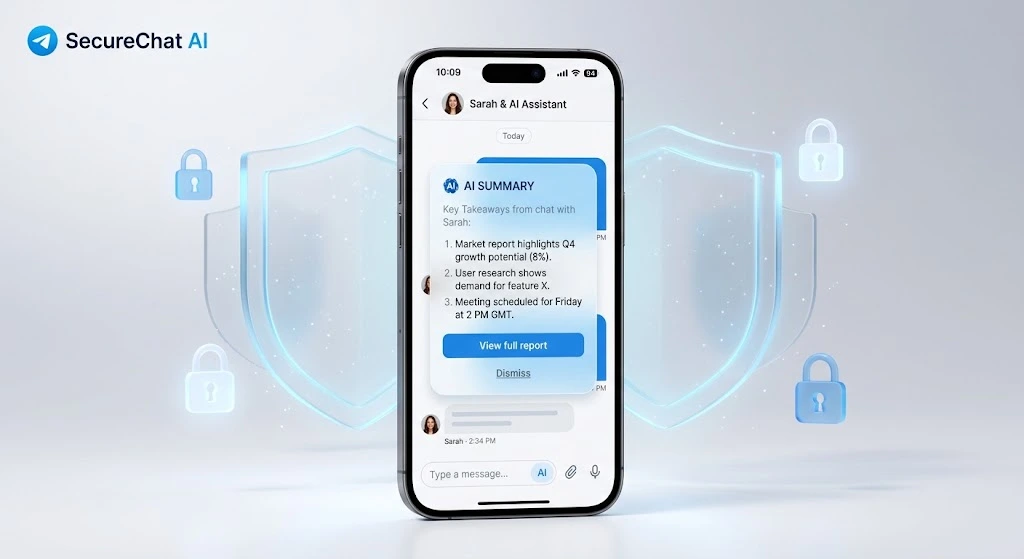
AI Summary appears on long channel posts and Instant View pages. Tap it and a wall of text turns into three to six bullet points, genuinely useful if you manage a news, finance, or crypto channel and want readers to skim before committing to the full post.
AI text editor lives inside the message input box. Highlight a sentence, tap twice, and you can fix grammar, translate it, or rewrite it in a specific tone such as formal or short. Anyone coordinating with international clients or team members through a channel or group will recognize how much time this saves compared to switching to a separate translation app.
Both tools run through Cocoon’s encrypted nodes instead of a centralized server, which is why Telegram can promise the requests are not stored and are never used to build a profile on you.
If you want to get a complete picture of everything the platform offers you can explore a comprehensive guide on the latest Telegram AI features and see how they integrate into your daily communication.
Telegram Cocoon Compared to Traditional Cloud AI
| Feature | Telegram Cocoon | Traditional Cloud AI (AWS, Azure) |
|---|---|---|
| Data storage after processing | Not stored | Often logged and retained |
| Who runs the hardware | Independent GPU owners worldwide | A single company’s data centers |
| Payment model | Pay in TON, market driven pricing | Fixed enterprise contracts |
| Visibility of your data | Hidden even from the node operator | Visible to the hosting company |
| Support for very large models | Still limited | Full support at massive scale |
The tradeoff is straightforward. Cocoon wins on privacy and cost for smaller, privacy sensitive tasks like summarizing a post or rewriting a sentence. Centralized providers still have the edge for running massive models that need heavy multi GPU coordination, something a distributed network of independent GPU owners has not fully matched yet.
What This Means If You Run a Telegram Channel or Business
For channel owners, none of this requires any action on your part. The AI features you already use, or could start using today, run on Cocoon whether you knew it or not.
Where it becomes genuinely useful is in three situations. If you post long analytical content in a niche like crypto, finance, or tech news, the summary tool keeps casual readers engaged instead of scrolling past a wall of text and leaving. If you manage international audiences, the inline translation tool lets you reply to comments or draft posts in another language without ever opening a separate app. And if privacy is part of your brand promise to subscribers, you now have a concrete answer when someone asks how their data is handled while using your channel’s AI powered tools: it never leaves an encrypted enclave, and Telegram itself does not see it either.
Telegram Cocoon for Developers
If you build bots or mini apps, Cocoon opens a door that was not there before. Developers can pay in TON for AI compute that costs less than typical cloud pricing, while keeping user data confidential by design rather than as an add on privacy policy written after the fact.
This affordable compute power plays a massive role in shaping the future of Telegram mini apps on TON blockchain because it allows developers to build complex interactive tools without massive server overhead.
One developer writing about the launch pointed out a real limitation worth knowing before planning a project around it. Cocoon solves the compute layer, but it does not handle user authentication, data storage, or hosting an app’s frontend. Those pieces still need to be built or connected separately.
Furthermore the network supports running inference natively on popular open source models such as DeepSeek and Llama. The financial transactions within this ecosystem run entirely on automated smart contracts. When an application requests computing power these contracts lock the funds and only release them to the hardware operator once the task is fully verified. This creates a trustless environment where developers do not waste budget on failed computations and hardware owners receive guaranteed payouts without chasing down clients.
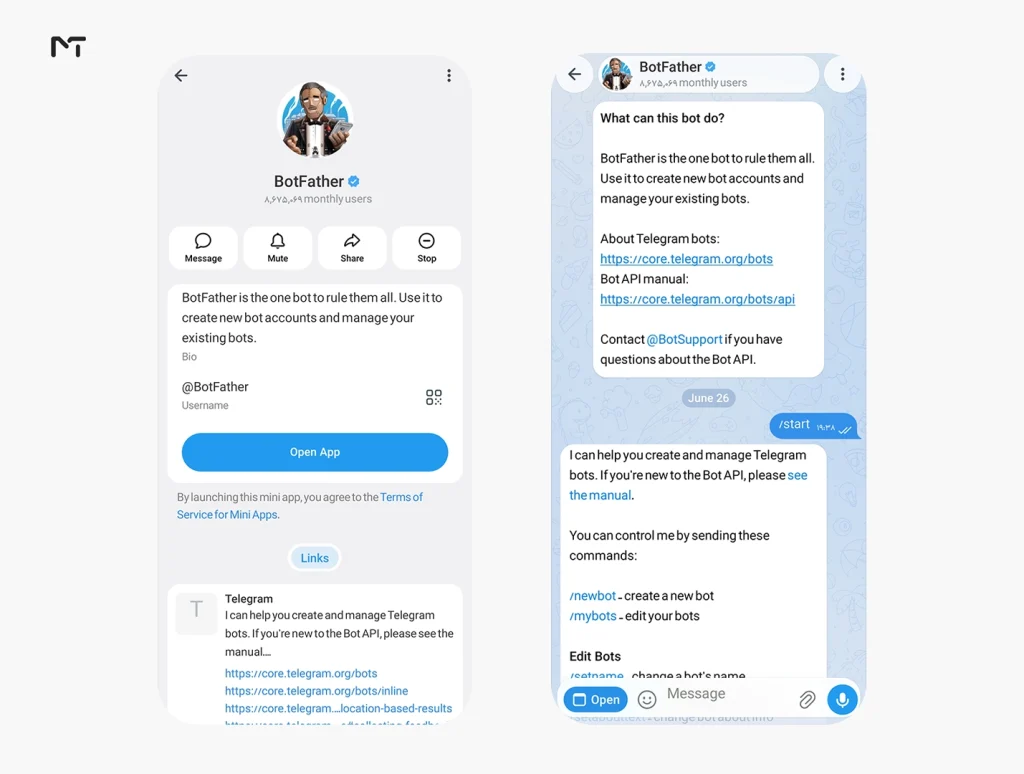
To start experimenting, developers can review Telegram’s official Bot API documentation and the Cocoon network’s own site for onboarding details. Creating a bot itself still goes through Telegram’s standard BotFather, the same official bot used to register every Telegram bot regardless of what compute it eventually runs on.
Once your initial environment is ready you can easily manage your API keys and project settings directly inside the BotFather mini app on Telegram before fully connecting it to the decentralized compute network.
Strengths and Gaps Worth Knowing
Cocoon is genuinely new, and that shows in both directions.
On the strong side, the privacy model is unusual in that it protects data from the infrastructure provider itself, not only from outside attackers. Telegram is also the first and largest customer, so unlike most decentralized projects, Cocoon launched with a real user base already sending it requests on day one instead of waiting years for adoption.
On the gap side the network currently depends on highly specific hardware to enable its confidential processing. Node operators must use advanced processors paired with high end graphics cards from Nvidia such as the H100 series. This steep hardware requirement limits how many everyday computer owners can join in these early months. Independent researchers have also raised valid questions about how airtight the privacy guarantees are in practice. Therefore it is worth treating any claim of total confidentiality with a healthy dose of skepticism until the system survives years of real world testing at scale.
Frequently Asked Questions
Is Telegram Cocoon a cryptocurrency?
No. Cocoon is the network itself, and TON is the cryptocurrency used to pay for compute inside it. Every feature Cocoon powers can be used without ever touching TON.
Do I need to enable anything to use Cocoon powered features?
No. AI Summary and the AI text editor work by default. The entire AI Features suite can be turned off from Settings, then Advanced, for anyone who prefers not to use it.
Is Telegram Premium required to use these tools?
No, basic summarization and text editing are available to every account. Premium accounts get higher daily usage limits and faster processing during busy periods. While you explore these specific capabilities you might also want to catch up on other new Telegram features released recently to make sure you are getting the most out of your regular or premium account.
Can developers build their own tools on Cocoon today?
Yes, applications for both developers and GPU providers opened alongside the network’s launch, and Telegram has said it plans to keep onboarding more of both groups over time.
The Bottom Line
Telegram Cocoon is not something to chase, buy into, or configure. It is the quiet infrastructure making the AI tools already inside the app faster to trust, whether the account in question is personal, a growing channel, or a network of bots serving other people’s communities. Understanding what sits behind those buttons is enough to use them with more confidence, and to explain them clearly the next time a subscriber asks where their data actually goes.
Still have questions about how this affects your own channel or bot setup? Reach out directly at @membertelsupport and the team will walk you through it.













Leave a Reply