
Offline members make your count look bigger, online members are the ones who might actually open your posts, and Premium members are the only type that can boost your channel. That is the short version of Online vs Offline vs Premium Telegram Members, and Premium sits on a separate axis because it describes what an account has, not how active it is.
Most of the confusion is vocabulary. Sellers use these words one way, Telegram uses them another way, and some order forms use “premium” as a quality label that has nothing to do with Telegram Premium. If you are about to spend money on members, or you are trying to read what a competitor did, pin the three terms down first.
None of these types replaces content people want to read. They change what your numbers say, and the numbers are the easy part.
- Offline members are real accounts that are inactive. They raise the count and do almost nothing else.
- Online members are active accounts, usually brought in through ads or invitations. Some read your posts, and a fair share leave.
- Premium members hold a paid Telegram Premium subscription. Only they can give your channel boosts.
- A large count with tiny view numbers is the fastest way to look fake.
- Every drop rate on a seller’s page is a claim, not a measurement.
What Online, Offline, and Premium Members Actually Mean
Three words, three different jobs. Online and offline describe behavior. Premium describes a paid subscription. Mixing them up is how people end up paying for the wrong thing.
Online telegram members
Online members are real Telegram accounts that behave like ordinary users. They can open your posts, react, and leave whenever they want. Seller descriptions say they arrive through ads, invitations, or being pulled in from related communities.
The word “online” trips people up. It does not mean the person is logged in at this moment. In a group, Telegram shows a small online counter in the header, and that is a live number that has nothing to do with what you buy. Here, online only means the account is active enough to see your content.
Because these are people, they also leave, often because of the mistakes that make channels lose Telegram members. One seller guide puts the early drop for members added through forced or ad based methods at 20 to 35 percent, and after that it depends on whether your content keeps them. Take that range as a rough sketch, not a promise.
The origin of these active accounts dictates whether they stay or leave. Sellers usually offer both global and targeted options. Global accounts originate from random countries, making them cheap but virtually useless if they do not speak your language. When users see content they cannot read, they simply leave. Targeted members are carefully sourced from specific regions or related niches. They cost substantially more because acquiring them takes real effort, but they provide the only actual chance of retaining a solid readership.
Offline telegram members
Offline members are accounts that exist but sit idle. Their status reads “last seen a long time ago.” Sellers describe them as accounts added in bulk from a database, which is why they are fast and cheap. They will not view posts, vote in polls, or reply.
A common trap is assuming offline members and automated bots are the exact same thing. While bots are cheap scripts created in massive batches by software, true offline members are often abandoned real accounts or secondary numbers that people simply never check anymore. Telegram hunts down obvious bot networks mercilessly and deletes them. Abandoned real accounts tend to survive these purges slightly longer because they have legitimate creation histories, making them a marginally safer choice if you only need superficial numbers.
One seller claims the drop on these accounts runs between 5 and 15 percent. There is a built in reason to expect erosion, though. Telegram lets every user set an account self destruct timer (Settings, then Privacy and Security, then “If away for”), and the default is six months. Accounts that never open the app are the likeliest to vanish, so an offline batch can shrink even when the seller did everything right.
They solve exactly one problem, a channel that looks empty at first glance. I would not expect more from them than that.
Telegram premium members
Telegram Premium members are accounts with an active paid Telegram Premium subscription. Telegram shows a badge next to their names in chats and member lists, and your channel statistics show how many subscribers have Premium, which makes this the one member type you can measure from inside Telegram.
What sets them apart is boosts. According to Telegram’s Premium FAQ, channels unlock certain features by collecting boosts from their Premium subscribers, and groups work the same way. Regular accounts, online or offline, cannot do this at all. Whether Premium earns back its monthly price on your own account depends on who benefits from paying for Telegram Premium, which is a separate decision from what it does for a channel.
One side effect worth knowing: Premium subscribers do not see Telegram’s official sponsored messages, so a Premium heavy audience is not automatically better if you plan to monetize through Telegram’s ad network for publishers.
When “Premium” on a seller’s menu is not Telegram Premium
Check this before paying. Some sellers sort members into tiers such as Real, High Quality, and Premium, where Premium means better looking profiles, not a Telegram subscription. A Premium tier at one site may contain zero Telegram Premium accounts. Other sellers do sell true Telegram Premium members and call them scarce. Ask which one you are buying, in plain words, before the order goes through.
Online vs Offline vs Premium Telegram Members: The Comparison Table
| Type | What you get | Views and activity | Boosts | Claimed drop | Best for |
|---|---|---|---|---|---|
| Online | Active accounts added by ads or invitations | Some open posts, a few react | Only if the account happens to have Premium | 20 to 35 percent early, per one seller | Channels that need view numbers to rise |
| Offline | Real but inactive accounts, last seen a long time ago | None | None | 5 to 15 percent, per one seller | A new channel that looks empty |
| Premium | Accounts with a paid Telegram Premium subscription | Varies, they are ordinary users with extra features | Yes, but the user decides where it goes | No reliable figure published | Channels chasing boosts and stories |
Seller figures here come from public seller pages and guides reviewed in October 2026.
Prices tell you something too. One SMM panel lists basic members at cents per thousand, while another guide puts real members at 10 to 40 dollars per thousand. A spread that wide means the cheap end is not selling the same thing as the expensive end. Premium accounts are scarce, so expect them at the top of any price list.
What Each Type Does to Your Views and Engagement
In any comparison of Online vs Offline vs Premium Telegram Members, the gap shows up fastest in your view rate. Take the average views of your last ten posts and divide by your subscriber count. A channel with 50,000 subscribers and 10 views per post sits at 0.02 percent, and one reviewer who tested sellers noted that a channel like that looks fake to everyone who checks.
There is no official benchmark. Rates differ by niche, and a news channel behaves nothing like a private trading room. Still, a gap that wide is hard to explain away, and advertisers or cautious visitors will spot it in seconds.
Take invented numbers to see the mechanics. Say a channel has 2,000 subscribers and its recent posts average 600 views, a 30 percent rate. Add 3,000 offline members and the average stays near 600, so the rate drops to 12 percent. Add 3,000 online members instead and views might climb, but only to the extent that some of them open your posts. Add Premium members and views barely move, because Premium is about features, not attention.
Offline members never help the rate, they only dilute it. Online members can help, with no guarantee. Views also drive discovery, so it pays to understand how organic and paid Telegram views compare and how channel views influence growth before you spend on either.
“The underlying algorithm always catches up to artificial numbers,” says David Kross, a digital community auditor who analyzed over two hundred monetized Telegram channels last year. “Our research showed that channels relying on cheap inactive batches experienced a massive forty percent drop in organic reach within just three weeks. Advertisers now demand strict view to member ratios before they spend a dime, meaning channels with inflated empty numbers disqualify themselves from serious revenue instantly.”
Telegram Member Types Breakdown
Offline Members
Action: Inactive accounts
Views: Zero impact
Drop Rate: 5 to 15 percent
Online Members
Action: Active and scrolling
Views: Moderate to High
Drop Rate: 20 to 35 percent
Premium Members
Action: Paid subscribers
Power: Channel Boosts
Drop Rate: User controlled
Online vs Offline vs Premium Telegram Members: Which Should You Choose?
Write down which metric you want to move. The right type follows from that.
A new channel that looks empty
People do check the count before they join, and a channel with a handful of subscribers makes that decision easy for them. A small batch of offline members can take the edge off an empty first impression, provided you already have posts worth reading. Before spending, try the free route and bring in your first hundred people from other platforms and your own contacts, guided by a proper Telegram growth strategy. If nobody joins at all, the cause is usually one of the common reasons people ignore a new Telegram channel, and most of them are fixable.
A channel you want to sell ads on
Advertisers care about views, not the count. Offline members hurt you here, because they widen exactly the gap advertisers look for. If you buy anything, online is the only type that can help, and only in modest batches whose effect you measure. Any purchase carries credibility risk if an advertiser checks your analytics, so weigh that before you click.
A group that needs real conversation
Offline and Premium members do nothing for a quiet group. Conversation needs people who talk, so the useful levers are targeting and moderation, not volume. If a group has gone silent, prompts usually do more than extra headcount, and AI engagement bots for dead Telegram groups are a better first step than buying members.
A channel that wants stories and higher levels
That is a Premium and boost question, and it gets its own section next.
Do Telegram Premium Members Actually Help With Boosts?
Yes, with limits you should understand before paying. Telegram’s Premium FAQ says channels level up through boosts from Premium subscribers or through giveaways, and the number required depends on the channel’s subscriber count. Third party pages quote different thresholds, some saying a tenth of a percent and others four tenths. Do not trust a fixed figure. Open the channel profile, then Channel Settings, then Statistics and Boosts, then Boosts, and read the number Telegram shows you. Menu names shift between app versions.
The catch is control. Each Premium user assigns their boost to a channel of their choosing. A boost stays active while their Premium is active, and they can move it to another channel once every 24 hours. So a Premium member you bought can take their boost elsewhere, or lose it when their subscription lapses. Before ordering, ask the seller whether you are getting accounts only or boosts delivered to your channel, and for how long they stay there.
There is a cheaper path some admins overlook. Under Telegram’s gifting rules, a channel admin can gift Telegram Premium to friends and contacts and receive three boosts for each gift, which can be assigned to the channel directly. Run the numbers on gifting before buying Premium members from a stranger. Before committing any budget, it also helps to understand how Telegram boost levels and unlocks work.
Drop Rates and Risks: What Sellers Say and What to Assume
Seller pages quote drops of 5 to 15 percent for offline members and 20 to 35 percent for members added through ad or forced methods, and one guide says ordinary low cost members can lose up to 30 percent. “No drop” members get a separate label, yet even a seller that offers them admits in its own FAQ that Telegram may remove such accounts if it detects them. Another page calls buying members totally safe. Nobody can verify that for you in advance.
Adding massive batches of inactive offline accounts to a new channel over a short period triggers Telegram automated spam filters. Always request gradual delivery from your seller to protect your global search ranking.
There is a much bigger threat than just losing the numbers you paid for. Telegram relies on automated algorithms to detect suspicious growth patterns across the platform. Adding thousands of inactive accounts to a quiet channel over a single weekend is a massive red flag. The system often responds by applying a shadowban, meaning your channel is silently removed from global search results. Once the algorithm flags your community as manipulated, regaining organic visibility is notoriously difficult. Smart administrators avoid this by asking sellers for gradual delivery, spreading the new arrivals over several days.
My read: treat every figure as advertising until your own numbers say otherwise. A few habits protect you.
- Get the refill terms in writing, including how many days they cover.
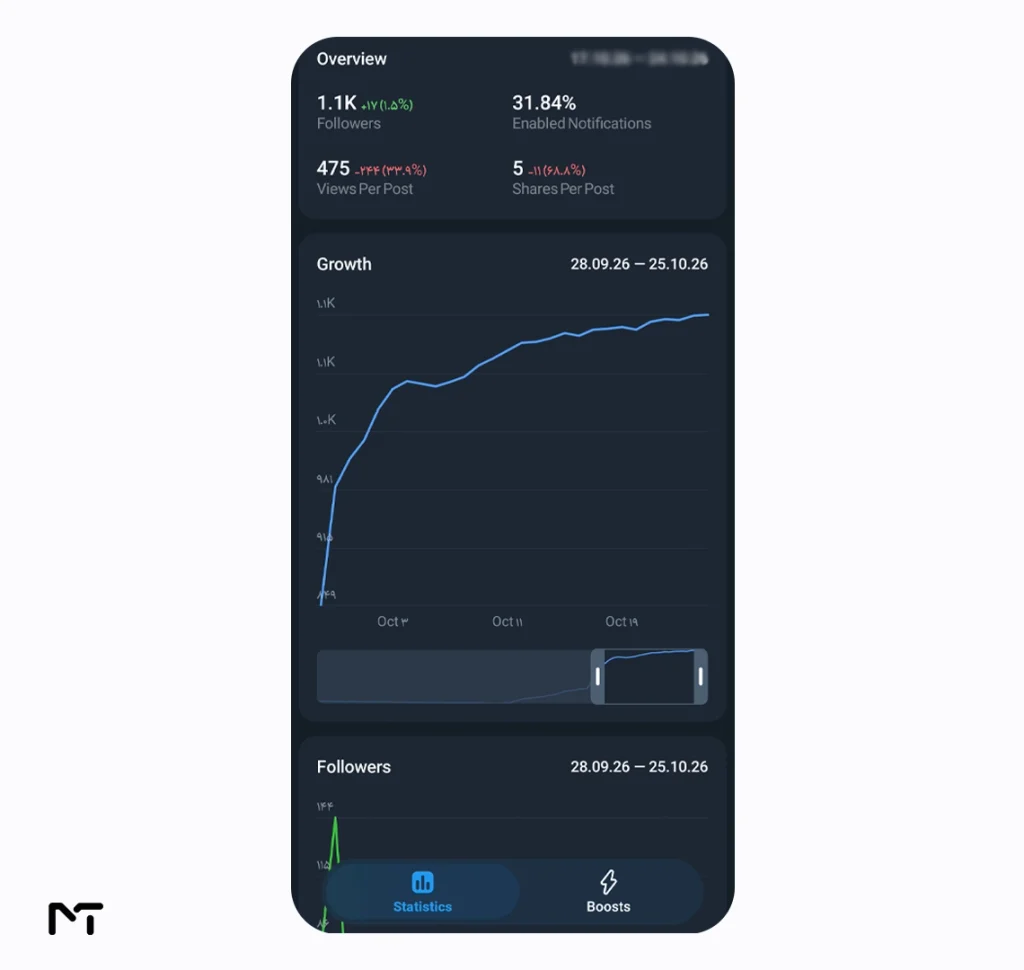
- Ask for delivery in batches rather than all at once. A vertical jump on your growth chart is the first thing anyone auditing the channel sees.
- Match member geography to your audience. Several sellers warn that mismatched locations look suspicious.
- Do not buy for a channel you cannot afford to lose.
Telegram does not endorse any of this, and rules can change without notice. If your channel carries real business value, the safest members are the ones who joined because they wanted to.
How to Check What You Actually Received
Do this every time, whatever type you buy.
- Before the order, record your subscriber count and the average views of your last ten posts. Without a baseline you cannot judge anything afterward.
- After each batch, open the subscriber list. Telegram shows status labels such as last seen recently, within a week, within a month, or a long time ago. A large block marked “a long time ago” points to offline accounts. In big channels Telegram shows only part of the list, so sample what you can see.
- A week later, recalculate the view rate. If the count rose and the rate fell, the batch added numbers and no readers.
- Open the growth chart in channel statistics and look for step shaped jumps. Check it again two weeks later for dips.
- For Premium, open the Boosts screen, confirm the boosts actually show up, and note when they expire.
If your member count looks off in ways you did not cause, a wrong Telegram member count usually has a boring explanation that most admins never think to check. A proper analytics tool makes this routine, so it is worth comparing Telegram channel analytics tools before you spend a cent on members.
A Sensible Way to Mix Member Types
Treat this as an example, not a rule. Imagine a niche channel with 30 posts and 400 subscribers. Order a modest batch of online members, perhaps 500, and wait a week. Read the view rate. If it holds up, order another batch. If it sags, stop and fix your content first. Add offline members only if the raw count matters for first impressions, and keep them a minority of the total. If boosts are the aim, try gifting or a Telegram giveaway before paying for Premium accounts.
Notice what is missing: any plan that works without organic growth. Members you pay for lift a channel that is already doing the right things. They do not rescue one that is not.
FAQ
Are offline Telegram members fake?
They are real accounts, not bots, but they are inactive. Sellers describe them as accounts that boost the count and do not engage. The audience is fake in the sense that nobody is reading, even if the accounts are genuine.
Do purchased Telegram members drop?
Often, yes. Sellers claim 5 to 15 percent for offline members and 20 to 35 percent for members added through ads or forced methods. Real people leave when your content bores them, and inactive accounts can be removed by Telegram. All of these numbers are claims, so measure your own.
Can Premium members boost my channel?
Yes. Only Telegram Premium users can give boosts, and each user decides which channel gets theirs. They can move it every 24 hours, and it ends when their subscription ends.
Which type of members is best for a new channel?
It depends on the goal. If you want the count to look healthier, offline members do that. If you want view numbers to rise, online members are the closer fit. Neither replaces organic growth from content people want.
How can I tell if my channel has fake members?
Divide average views by subscribers, check the last seen labels in the subscriber list, look for step shaped jumps in the growth chart, and compare member locations with your audience.
Conclusion
Online vs Offline vs Premium Telegram Members comes down to which number you want to move, the count or the views. Offline moves the count and stays quiet. Online moves both a little, when it works. Premium moves neither, yet it is the only route to boosts through purchased accounts, and even there the boost belongs to the user, not to you. Whatever you pick, measure your view rate before and after, get refill terms in writing, and keep posting things people want to read. If you decide to buy, message the Membertel support team on Telegram with the goal you wrote down at the start and your current view rate, and ask which member type fits it.













Leave a Reply