
Pyrogram vs Telethon comes down to one practical question. Do you need raw speed and support for the newest , or do you want a library with years of predictable behavior behind it? If your project handles large media transfers and needs every bit of performance you can get, Pyrogram and its actively maintained forks are usually the stronger pick. If you want a pure Python codebase that has been through nearly a decade of real world use, Telethon still holds up in 2026, even though the project recently changed hands in an unexpected way.
Both libraries let you talk to Telegram through MTProto, the same protocol Telegram’s own apps use. That means you get full access to features the official Bot API simply does not expose, things like reading full chat history, managing your own account as a user, or building tools that behave like a real Telegram client instead of a limited bot. The catch is that with this power comes more responsibility for handling rate limits, session security, and library maintenance yourself, which is exactly what this comparison walks through.
Key Takeaways
Pyrogram is fast thanks to its C based encryption layer, but the original project was archived in December 2024 and now lives on through community forks such as Kurigram and Pyrofork. Telethon is written in pure Python, historically a bit slower without the optional cryptg speed up, and its maintainer moved the entire project from GitHub to Codeberg in February 2026, where it continues to receive updates in what the maintainer calls maintenance mode.
Neither library is dead, but neither one looks the way it did two years ago either, and that changes how you should approach picking one in 2026.
Pyrogram vs Telethon at a Glance
| Category | Pyrogram (and forks) | Telethon |
|---|---|---|
| Language style | Async first, some sync support | Async first, some sync support |
| Speed booster | TgCrypto (C extension) | cryptg (optional C extension) |
| Session storage | Mostly session strings | SQLite file by default |
| Current maintenance | Original repo archived, forks like Kurigram and Pyrofork carry it forward | Moved to Codeberg, maintained by original author in maintenance mode |
| Best for | High volume automation, media heavy bots, newest Telegram features | Long running userbots, group management scripts, projects needing stability |
| License | LGPL and GPL (varies by fork) | MIT |
Syntax and Developer Experience
How the code actually feels to write is just as important as raw speed. Pyrogram relies on an elegant decorator system that routes incoming updates using simple filters which feels incredibly familiar if you have built web applications before. Telethon takes a slightly more explicit approach requiring you to define exact event types for its listeners. While beginners often find Pyrogram faster to pick up the explicit structure in Telethon prevents unexpected overlapping events when your codebase grows larger. Choosing between them often comes down to which coding style you personally prefer.
Speed and Performance
Neither library is slow by default, but they get their speed from different places, and that difference actually matters once you are moving thousands of messages or media files a day.
How Pyrogram Handles Speed
Pyrogram relies on TgCrypto, a cryptography library written in C specifically for this framework, to handle the AES encryption Telegram’s protocol requires. Once TgCrypto is installed, Pyrogram automatically uses it without any extra configuration on your end. On top of that, Pyrogram’s documentation recommends pairing it with uvloop, a drop in replacement for Python’s built in asyncio event loop, which the maintainers state can make asyncio itself run two to four times faster. For anyone downloading or uploading large media files at scale, this combination is where Pyrogram tends to pull ahead.
How Telethon Handles Speed
Telethon is pure Python by default, which keeps the codebase simple to read and debug, but it also means encryption happens in Python unless you install the optional cryptg package. According to Telethon’s own documentation, installing cryptg moves encryption and decryption into C, and the difference is significant, going from roughly a hundred kilobytes per second to several megabytes per second when your connection allows it. Without cryptg, Telethon will still work fine for typical bot traffic and moderate automation, but it will noticeably lag behind Pyrogram on file heavy workloads.
FloodWait Error Handling in Both Libraries
FloodWait is not a bug, it is Telegram’s way of telling your script to slow down after you have made too many requests too quickly. Both libraries expose this as a catchable exception, and the main practical difference between them comes down to one small detail, the name of the attribute that holds the wait time.
Pyrogram raises a FloodWait exception where the wait time sits in the value attribute, so you catch it and read e.value. Telethon raises FloodWaitError instead, and the same wait time sits in the seconds attribute, so you read e.seconds. If you already have a FloodWait handling routine built for one library, porting it to the other is mostly a matter of renaming that one attribute, since the underlying logic of catching the exception and sleeping for the given duration stays the same.
That said catching the exception correctly is only half the job. If your script restarts and blindly retries a request before the cooldown finishes a simple seven second wait can quietly turn into a restriction lasting several hours. Avoiding this exact crash loop mistake requires proper state management and understanding how to fix a Telegram FloodWait error fast is the absolute best way to ensure your automation survives those official rate limits.
Catching limits is only part of the battle. Using any library to automate a normal Telegram account carries a massive risk of permanent suspension if you act like a spammer. Neither framework can protect your phone number if you ignore wait times join twenty groups in a minute or log in from blacklisted IP addresses. Spacing out your automated actions to mimic human behavior is an absolute requirement regardless of the tool you use.
Resource Usage and Memory Footprint
For small scripts running a handful of automations, resource usage between the two libraries is close enough that it rarely decides anything. The gap opens up once you start running dozens of sessions in parallel to build a multi account Telegram automation bot with Python code or when you handle continuous update streams to monitor several large groups at once. Pyrogram’s C based encryption layer tends to keep CPU usage lower under sustained load, which matters more on shared or budget hosting where every percentage point of CPU counts.
Telethon without cryptg puts more load on the CPU during heavy encryption and decryption cycles, though for scripts that mostly send occasional messages rather than transferring files, this difference is rarely something you would notice in practice.
When we upgraded our network to handle over four million media messages a week pure Python was causing massive bottlenecks notes Sarah Jenkins a lead backend infrastructure engineer. Moving our heavy downloading workers to a Pyrogram fork with C based cryptography dropped our server CPU usage by nearly forty percent. However we still rely entirely on Telethon for our administrative text bots because its long term memory management and stability have never failed us.
Support for Telegram’s Latest Features and Updates
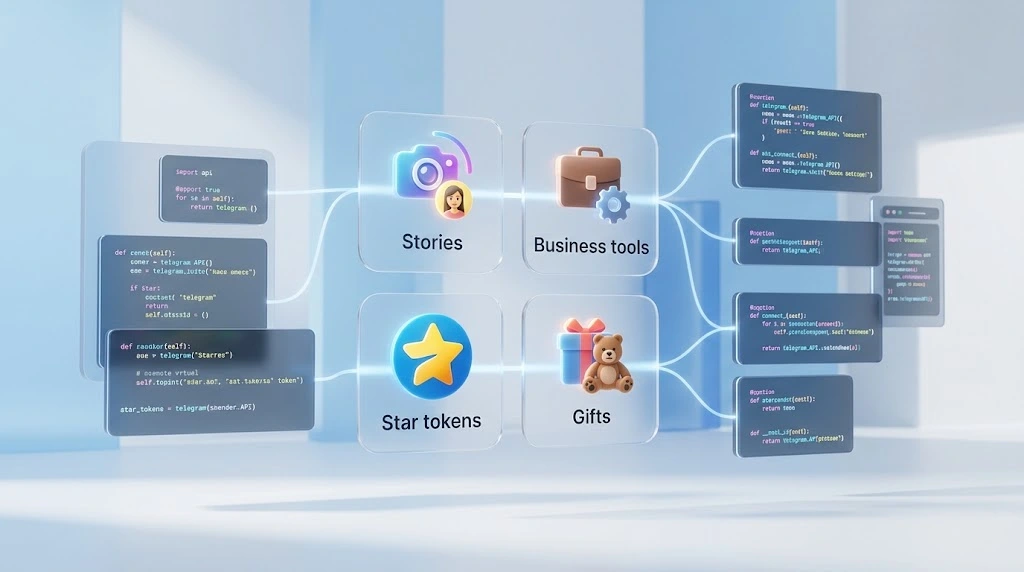
This is where the maintenance situation for both libraries actually matters more than raw benchmarks. Telegram adds new features regularly, things like Stories, Business accounts, Gifts, and Topics, and a library only supports them once someone updates its code to match Telegram’s current API layer. Staying updated with these protocol changes is a big part of mastering Telegram 2026 from a developer standpoint, which is exactly why relying on an actively maintained library matters so much.
The original Pyrogram repository was archived by its owner in December 2024 and is no longer maintained or supported, according to the project’s own documentation. This does not mean Pyrogram is unusable, but it does mean the original package on PyPI is effectively frozen. The community response has been a handful of actively maintained forks.
Kurigram, maintained by KurimuzonAkuma, positions itself as a drop in replacement for Pyrogram with support for Gifts, Stories, Topics, and Business features already built in. Pyrofork and PyroTGFork are two other community forks pursuing similar goals. If you are starting a new project with Pyrogram’s syntax in 2026, you are realistically choosing one of these forks rather than the original package.
Telethon’s situation is different but just as worth knowing before you commit to it. In February 2026, Telethon’s maintainer moved the entire project from GitHub to Codeberg, and the GitHub repository is now archived and read only. The move was announced ahead of time on Telethon’s own update channel, and according to the PyPI listing, the library is now described as being for the most part in maintenance mode, meaning new Telegram API layers are still added and bug fixes are still welcome, but large new features are less likely going forward.
The good news is that Telethon is not abandoned. Commits and releases have continued on Codeberg well into mid 2026, and the maintainer has stated the project will keep receiving updates there.
Writing the code is easy until you hit a wall and need to check the manual. Telethon has a massive advantage here because its decade of history means almost every error you will ever face has a solved thread on Stack Overflow. Its core documentation is also untouched despite the Codeberg move. Pyrogram forks like Kurigram do maintain updated guides but when dealing with very obscure bugs you might have to dig through older archived Pyrogram documentation or ask for help in their active Telegram support groups since they lack the extensive search engine footprint of older projects.
Proxy Support and Network Restrictions
If your code runs on servers where Telegram is restricted you will need proxy support. Telethon natively handles standard SOCKS protocols and custom proxies which makes bypassing network blocks very easy during client setup. Pyrogram forks also provide full proxy routing but usually require an external package like PySocks to function. Both frameworks perform beautifully once connected but many developers find debugging dropped proxy connections slightly easier in Telethon because its timeout errors are very descriptive.
Session Files and Migration Between Libraries
Both libraries actually default to generating a local SQLite database file to store your authorization keys and routing data. The main difference is that Pyrogram and its forks make it incredibly simple to export this data into a single line session string for cloud deployments whereas Telethon relies heavily on keeping the database file intact.
Because the underlying session data represents different internal structures, you cannot simply take a Telethon session file and load it into Pyrogram or vice versa without a proper migration step.
If you are planning a move from one library to the other, the safer approach is to keep your existing session logged in through its original library while you build and test the new implementation, then switch over once you have confirmed everything works, rather than trying to convert session data directly.
This same careful approach applies if your architecture relies on Telegram tdata automation rather than standard logins. No matter if you use SQLite databases or desktop client folders, knowing exactly how to protect your TData and Telethon sessions is a required security step because exposing these local files gives anyone full control over your accounts.

Which One Should You Choose in 2026
There is no universal answer here, only a better fit depending on what you are building.
Best for Userbots
If you are building a userbot that runs on a personal account for extended periods, stability and predictable behavior usually matter more than raw speed. Telethon’s long history and pure Python design make debugging more straightforward, and its move to Codeberg has not slowed down its release cadence.
Best for Group and Channel Management Scripts
For moderation bots, welcome message automation, or administrative scripts designed to quietly extract members from a Telegram channel for data analysis, either library handles the workload comfortably. Kurigram’s built in support for newer account level features like Topics and Business accounts gives it an edge if your bot needs to interact with those specific features.
Best for High Volume Automation
If your project requires you to master bulk messaging on Telegram with session files, process heavy media loads, or operate under strict hardware limits, Pyrogram through one of its maintained forks easily takes the lead thanks to its natively compiled cryptography. Pyrogram through one of its maintained forks is the stronger choice thanks to TgCrypto and its lower CPU footprint under sustained load.
Frequently Asked Questions
Is Pyrogram faster than Telethon?
Generally yes, mainly because of TgCrypto, its C based encryption library that Pyrogram uses automatically once installed. Telethon can close most of that gap by installing the optional cryptg package, but Pyrogram remains the faster option by default for file heavy workloads.
Which library handles FloodWait better, Telethon or Pyrogram?
Neither handles it better in a meaningful sense, since both simply raise an exception containing the required wait time and leave the actual handling logic to your code. The only real difference is the attribute name you read the wait time from.
Can I use a Telethon session with Pyrogram?
No, not directly. The two libraries store session data in different formats, so you need to log in fresh with the new library rather than converting an existing session file.
Is Telethon still maintained in 2026?
Yes, though the project moved from GitHub to Codeberg in February 2026 and is now described by its maintainer as being mostly in maintenance mode, with continued bug fixes and API layer updates rather than major new features.
Which is better for building a userbot, Pyrogram or Telethon?
Telethon is generally the more common choice for userbots because of its long track record and pure Python design, though Pyrogram through forks like Kurigram works just as well if you want faster performance and newer Telegram feature support.
Does Pyrogram support the latest Telegram features?
The original Pyrogram package does not, since it was archived in December 2024. Actively maintained forks such as Kurigram do add support for newer features like Stories, Gifts, and Business accounts, so if you need current feature support, you should install one of those forks rather than the original pyrogram package.
Conclusion
Pyrogram vs Telethon is no longer a simple question of syntax preference. Both original projects have gone through real changes in 2026, Pyrogram’s repository sits archived while community forks carry its development forward, and Telethon has relocated to Codeberg under its original maintainer. Neither change makes either library a bad choice, but both are worth knowing before you build something you plan to maintain long term.
Pick Pyrogram through a maintained fork if speed and current Telegram features matter most to your project, and pick Telethon if you value a long track record and a pure Python codebase. Whichever one you choose, if you run into account limits, session issues, or need help setting up your Telegram automation the right way, reach out to @membertelsupport.














Leave a Reply