

You can automatically detect and remove inactive users from a Telegram group by adding a management bot as an admin, setting an inactivity limit somewhere between 30 and 90 days, checking the list it builds, and kicking the people on it in small batches. Telegram has no button of its own that finds silent members and clears them out, so every method that works leans on a bot or on careful manual checks.
One thing gets skipped in most guides. A bot only knows what it has seen, which means its first scan is usually incomplete. And “inactive” can describe three very different people: a member who never writes but reads everything, a member who hasn’t opened Telegram in months, and an account that doesn’t exist anymore. Each of them calls for a different decision.
Below you’ll find how to tell them apart, which tools can do the job in 2026 and what they cost, a cleanup routine that doesn’t kick people you’d miss, and what changes when you run a channel instead of a group.
What Counts as an Inactive Member on Telegram
Before you remove anyone, decide who you’re actually looking for. Telegram doesn’t define the word, so it gets used loosely, and that’s where most cleanups go wrong. Telegram says members in groups and subscribers in channels, while most people search for inactive users, so you’ll see all three words in this guide and they mean the same people.
Three Profiles Behind an Inactive Member List
Match your action to actual account behavior
Never writes in chat, yet still opens Telegram and reads your posts regularly.
Valuable audience in news, deals, course and paid groups.
Profile shows Last seen a long time ago with zero messages recorded by your bot.
Solid cleanup candidate after a pinned notice and full bot watch cycle.
Appears as Deleted Account with a blank avatar after the self destruct timer runs out.
Triggers after 1 to 24 months logged out. Zero risk to remove.
What Hidden Last Seen Labels Actually Mean
Telegram deletes accounts that stay logged out. Depending on when the account was created, the default timer sits between six and eighteen months, and each person can change it to one, three, six, twelve, eighteen or twenty four months in their privacy settings. When that timer runs out the account disappears from Telegram, and in your member list it turns into a Deleted Account. So the offline member you see today is sometimes the deleted account you’ll see later.
Silent readers deserve a second thought. In a news group, a deals group or a course community where you do most of the posting, people reading quietly are the whole point. Kicking them for not typing would shrink the audience you built. I’d only treat silence as a problem in groups that are supposed to be conversations.
“Across the communities we audit between 2,000 and 15,000 members, only about 9 to 14 percent of members send a message in any thirty day window, even when nearly half the group still reads posts weekly,” notes Lukas Weber, a community operations consultant for European fintech groups. “Admins who set an aggressive 30 day silence rule without checking read reach first routinely wipe out a third of their real audience in a single afternoon.”
Why Telegram Can’t Show You Who Is Inactive
If you’ve looked for a filter that shows who hasn’t been active, you’ve noticed it isn’t there. Two limits explain why, and both decide how far you can trust any inactivity list, whether you build it yourself or a bot does.
Last seen is only approximate
When someone hides their last seen time, you don’t get a timestamp. You get one of four labels: recently, within a week, within a month, or a long time ago. Recently covers anything from a few seconds up to about three days. Within a week runs from roughly three to seven days, within a month stretches up to thirty days, and a long time ago means more than a month.
So a member showing a long time ago is a solid candidate, while within a month tells you very little. Keep in mind that last seen measures opening the app, not writing in your group.
Bots only know what they have seen
Telegram’s bot interface has no method that hands a bot the full member list of a chat. A bot builds its picture from the messages, joins and leaves that happen while it’s in the group. Two things follow from that.
First, a member who never posted after the bot arrived looks the same as a member the bot has never heard of, so find out how your chosen bot treats people who joined before it did. Second, if your inactivity limit is 60 days, give the bot a full 60 days of watching before you trust a purge. Skipping that wait is an easy way to remove the wrong people.
Even inside the app itself, Telegram caps the visible member list at 10,000 people in large supergroups. Once a community passes that mark, scrolling through everyone by hand stops being an option anyway, and the Telegram Bot API becomes the only practical way to track activity through incoming messages and join events.
How to Find Inactive Members Without a Bot
For a small group you don’t need software. Open the member list and scan for people whose last seen says a long time ago. It’s slow, but under a few hundred members it’s realistic, and you end up with names instead of a number.
For a faster read on who’s still around, post a poll with two options, something like “I’m still here” and “Remove me”, and switch off anonymous voting so you can see who answered. Pin it for a week and say what you’re planning. People who answer are active by definition. People who don’t aren’t automatically gone, but now you have a fair shortlist and a message you can point to if anyone asks why they were removed.
If your group has at least 500 members, check Telegram’s native Statistics page inside Group Info before you touch the member list. It won’t hand you a list of quiet names, because Telegram keeps individual reading habits private, but it shows daily active viewers alongside the share of members who actually send messages. That gap tells you right away whether you have a dead account problem or just a healthy crowd of silent readers.
Best Ways to Automatically Detect and Remove Inactive Users
Plenty of Telegram bots claim to remove inactive users. While preparing this guide I started two small single purpose cleaner bots from public listings and neither one answered. That’s a good reminder to test any bot on a throwaway group before it touches yours. The two options below are established tools to manage Telegram groups, and both have public documentation.
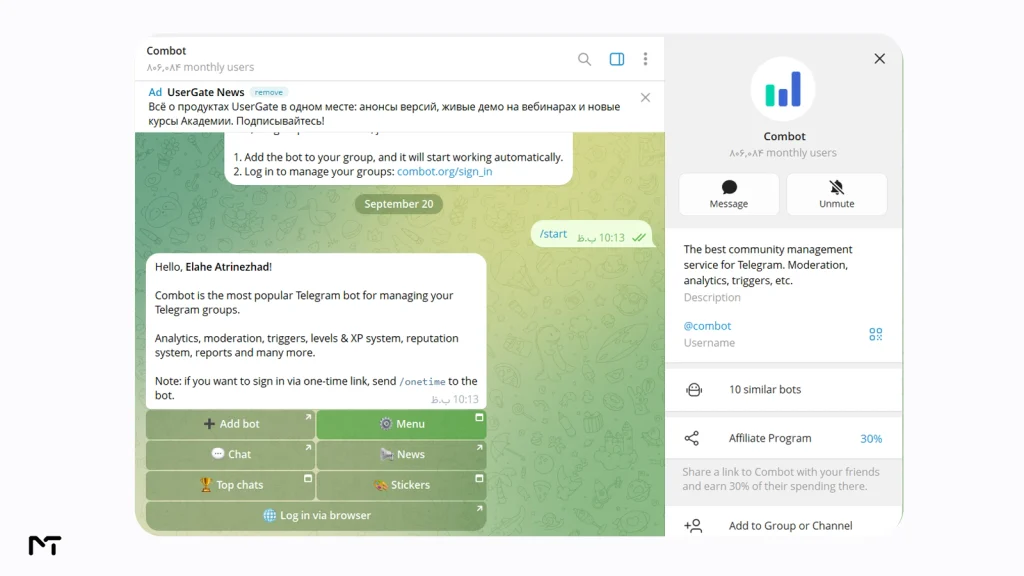
Combot
Combot works through a web dashboard and commands inside Telegram. On the free plan you get analytics with 32 days of history and mass removal, which lets you remove members in bulk by join date, name or username after reviewing the list. The part this guide cares about, the inactivity kicker, is what lets you automatically detect and remove inactive users, because it removes members who stay silent past the limit you set. It can run in the background or be launched manually whenever you want a cleanup, and it belongs to the Pro plan.
At the time of writing Pro costs $9.99 a month or $99.99 a year, and Pro stretches analytics history to 100 days. Prices change, so check the pricing page before you commit.
GroupHelp
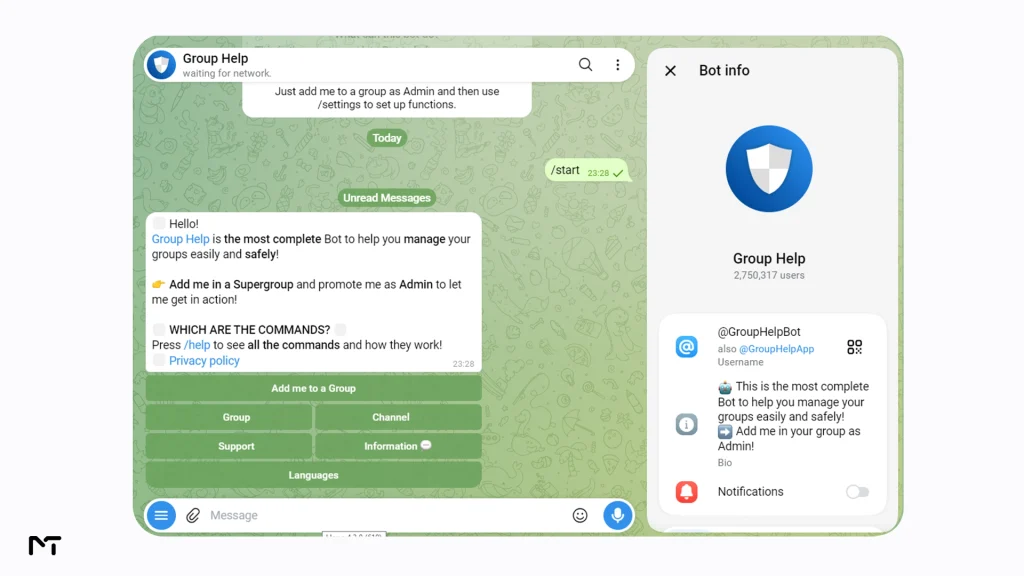
GroupHelp is a long running moderation bot with a lot of features, and removing inactive members is one of them. It’s free to start, with an optional Pro tier you get through a donation that starts at 1.50 euros for five groups. It stores member activity and gives admins an inactives command to see who it has recorded as quiet.
Its own guide recommends adding two companion helper bots, because Telegram limits how many actions a single bot can perform in a given time. That’s worth knowing if your group is big, since a mass removal is exactly the kind of job that hits those limits.
What about Miss Rose
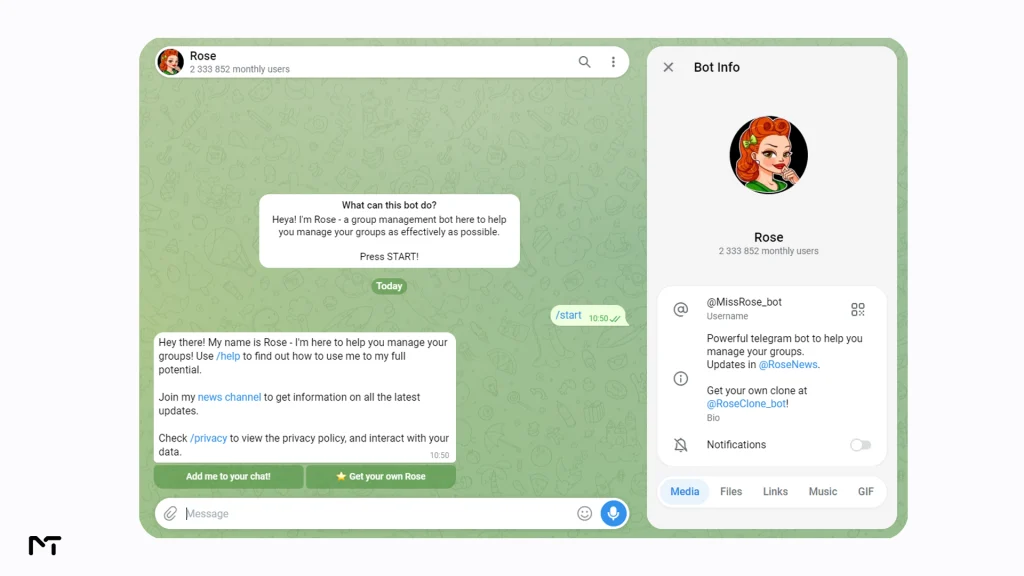
Admins often install Miss Rose first because it handles spam so well, then spend an hour hunting for an inactivity setting that isn’t there. Rose deliberately avoids storing message histories for activity tracking, so it cannot list or kick quiet members. Keep Rose for moderation if you already like it, and pair it with GroupHelp or Combot strictly for cleanups. Also keep in mind that Telegram restricts bots to roughly 20 to 30 administrative actions per minute in a single chat before triggering temporary flood waits, which is why large cleanups always take patience or helper bots.
Quick comparison
Picking the right method comes down to how big your group is and whether you want ongoing tracking or a single sweep. The table below puts every option side by side so you can compare how it spots quiet members, what it costs at the time of writing, and the main limit you’ll hit.
| Option | How It Spots Inactive Members | Cost at the Time of Writing | Main Limit |
|---|---|---|---|
| Manual check | Last seen labels and a pinned poll with visible votes | Free | Slow individual checks, approximate labels, 10,000 visible list cap |
| Combot | Tracks group activity and kicks anyone silent past your limit | Inactivity kicker in Pro at $9.99 a month or $99.99 a year | Free plan keeps 32 days of analytics, Pro keeps 100 days |
| GroupHelp | Records member activity and lists inactive members with a command | Free to start, optional Pro from 1.50 euros for five groups | Only knows activity after install, caps at 20 to 30 bot actions per minute |
| Miss Rose | Does not track message silence or build inactivity lists | Free | Built for spam moderation rather than inactive member removal |
Whichever bot you pick, ask four questions before the first run. Can it show you the list before it removes anyone? Can you exempt admins and trusted quiet members? Does it kick or does it ban? And does it tell you when each person was last active? If the answer to any of those is no, keep looking.
Remove Inactive Members From Telegram Group Step by Step
This is the routine I’d follow for any group above a few hundred people.
- Add the bot as an admin. Turn on only the Ban Users permission, which is the exact toggle Telegram uses for kicking as well as banning. Leaving every other admin switch off keeps your group safe if a bot ever misbehaves.
- Remove in small batches. Kick 30 to 50 inactive members at a time, check Recent Actions in your admin panel to inspect the log, and make sure the group looks normal. Recent Actions holds 48 hours of history, so you can catch and reverse an accidental removal right away before hitting Telegram’s rate limits.
- Use the bot’s kick mode rather than manual removal. When you remove someone by hand inside a supergroup, Telegram drops them onto the Removed Users list, which acts like a ban and blocks them from using your invite link again. A proper bot set to kick mode removes the member and immediately clears them from that blocked list through the API so returning members can rejoin freely.
- Exempt the right people. Admins, moderators, other bots and any quiet members you know are valuable should go on the exempt list before anything runs.
- Preview the list. Ask for the list of members that would be removed and check at least ten names by hand. If you recognize people who clearly belong, your limit is too short or the bot hasn’t watched long enough.
- Remove in small batches. Kick a few dozen inactive members, wait, and make sure the group looks normal. Mass removals can trigger Telegram’s action limits, and it’s easier to stop early than to undo a big mistake.
- Kick, don’t ban. In a supergroup, a removed member lands on the removed users list and can’t come back through an invite link until an admin takes them off it. If someone might return, remove them from that list.
- Measure. Write down your member count and your average messages per day before you start, then look again two weeks later. The goal is a better ratio, not a smaller number for its own sake.
Safe Purge Sequence Before You Remove Anyone
Let the Bot Watch
Add the bot with Ban Users access only and wait out a full 30 to 90 day cycle.
Warn and Exempt
Pin a cleanup date and whitelist admins, helper bots and paying subscribers.
Kick in Small Batches
Spot check 10 names by hand, then kick 30 to 50 users per batch instead of banning.
Audit Recent Actions
Check the 48 hour admin log for mistakes and compare chat ratios after two weeks.
| Group Type | Starting Inactivity Limit |
|---|---|
| Active discussion group | 30 days without a message |
| Support or course community | 60 days without a message |
| Announcement style group with little talking | 90 days, or review manually |
These are my own starting points rather than rules from Telegram. If a group goes quiet in summer or around holidays, lengthen the limit instead of cutting people who’ll be back in September.
One exception deserves its own rule: never run a message based inactivity bot inside a paid or subscription group. Paying members who join through recurring billing or Telegram Stars often show up purely to read signals, lessons or market updates without ever typing a word. Let your subscription manager handle expired access automatically instead of punishing quiet buyers.
How to Remove Deleted Accounts From a Telegram Group
Deleted accounts are the easiest decision in this whole guide, because nobody is behind them anymore. They sit in your member list as Deleted Account with a blank avatar and they pad your member count without ever reading a message.
Telegram says these accounts drop out of member lists on their own within a few days. Plenty of admins report the opposite, with deleted accounts hanging around for months. If you see them, you can remove them by hand: open the member list, tap the Deleted Account and remove it. For a handful that’s fine. For hundreds, look in the settings of the bot you chose for a deleted account cleanup option, and try it on a small group first.
In GroupHelp you can run a deleted account sweep from the moderation menu for profiles the bot has already recorded. If you inherited an older group or channel with hundreds of ghost profiles that predate your bot, dedicated cleanup tools like Crosser Bot can scan public member lists and clear out Deleted Accounts or suspicious join waves from specific dates in a single pass.
Remove Inactive Subscribers From a Telegram Channel
Channels work differently, and this is the part most guides forget. Subscribers don’t write messages, so you can’t measure silence. The best signal you have is how many people actually see your posts compared with how many are subscribed.
Most Telegram channel analytics tools calculate this for you, but the math is simple enough to do by hand: take the views on your last ten posts, average them, and divide by your subscriber count. If your channel has 10,000 subscribers and recent posts average 1,200 views, that’s 12 percent. That’s just an example to show the math, not a benchmark. What matters is how your own number moves over time and how it compares with channels in your niche.
Once a channel passes 50 subscribers, Telegram also unlocks a built in Statistics panel in Channel Info that tracks your real view rate, notification status and growth sources automatically. What Telegram still hides is the full subscriber roster: in any channel above 200 subscribers, the app only displays the 200 most recent joins unless you search letter by letter. That cap is why manual channel cleanups hit a wall fast, except when you use a specialized cleaner tool to remove Deleted Accounts or fake subscribers who all joined during a narrow date range.
Telegram gives channel admins a subscribers list where you can remove people one at a time, but there’s no built in way to find the inactive ones or to remove them in bulk. For a large channel, a manual purge is rarely realistic, and I’d put the effort into content that gets read before I’d spend a weekend deleting subscribers. Removing dead accounts can lift your view rate, which is the number many advertisers look at first. It just won’t fix a Telegram channel that isn’t growing because nobody finds the posts interesting.
Mistakes That Cost You Real Members
- Purging before the bot has watched long enough. A fresh install doesn’t know your group’s history.
- Treating readers as dead weight. In announcement style groups, silence often means the group is working.
- Banning when you meant to kick. A ban closes the door, and some of those people would have come back.
- Skipping the announcement. Members who get removed with no warning are the ones who write angry messages and leave bad reviews.
- Giving away your login. No cleanup tool needs the code Telegram sends you when you sign in. If a bot or a script asks for it, close the chat.
- Running scripts on your personal account. Automated actions through your own account can get it limited. A proper bot with admin rights is the safer route.
What to Do When Your Member Count Drops
After a cleanup the number at the top of your group will be smaller, and that’s normal. A group of 800 where 300 people talk is healthier than a group of 2,000 where 100 do, even if the second one looks bigger on a screenshot.
The more useful question is how to stop the next batch of members from going quiet.A few habits that increase engagement on Telegram do most of the work. Greet new members with a welcome message that asks them something easy to answer. Keep the rules pinned so nobody has to guess. Post something that invites replies at least a few times a week, and use polls when you can, because they take one tap. And if a topic keeps getting ignored, stop posting it.
If you do want to rebuild your numbers after a cleanup, for instance once you figure out how many Telegram members you need for a new group to look credible, do it after the purge, not before. Otherwise you’re paying to add people you may remove a month later. If you go with a members service, pick one that backs its members with a retention guarantee, so the count you pay for is the count you keep.
FAQ
Can you automatically detect and remove inactive users on Telegram?
Not with Telegram alone. What Telegram does by itself is delete accounts that stay logged out for the self destruct period, which is six months by default, and those then show up in your member list as deleted accounts. A member who simply stops writing stays in the group until an admin removes them, and that’s the job a bot takes over.
Can you see who is inactive in a Telegram group?
Only roughly. Last seen gives you four labels, recently, within a week, within a month and a long time ago, and some members choose to share the exact time. A bot can add message activity on top, but only for what it has seen since it joined the group.
How long does Telegram take to delete an inactive account?
The default is six months without logging in, and each user can set it to one, three, six or twelve months. The count depends on logging in, not on sending messages.
Can a removed member rejoin the group?
In a supergroup, a removed member can’t rejoin through an invite link until an admin takes them off the removed users list. After that they can join again like anyone else.
Should I remove inactive subscribers from my Telegram channel?
Check your view rate first. If recent posts reach a small share of your subscribers and you know many accounts are dead, a cleanup can make the numbers more honest. If the posts just aren’t landing, removing people won’t solve that.
Does removing inactive members boost how many people see my Telegram posts?
Telegram doesn’t use an algorithmic feed that hides your posts when engagement drops, so kicking quiet people won’t magically push your messages to more screens. Every member who hasn’t muted the chat already receives every post. What a cleanup actually improves is your view to member ratio, your admin safety, and how trustworthy your community looks to sponsors and new arrivals.
Final Thoughts
To automatically detect and remove inactive users without regrets, define inactive before you start, let your bot watch long enough to know the group, preview every list, and remove inactive members from your Telegram group in small batches after a clear announcement. Do it once or twice a year rather than every week, and keep an eye on your engagement numbers instead of the member count alone. Thanks for reading. If this saved you an evening of scrolling through member lists, I’m glad. Need a hand rebuilding your numbers after a cleanup? Message @membertelsupport on Telegram.







Hi
Hi, how can we help you?