

The Telegram search engine is the built in tool, marked by the magnifying glass icon, that lets you look up channels, groups, bots, and now individual posts by typing a name or keyword. Tap it once and Telegram sorts what it finds into contacts, chats, and a global results list, though it doesn’t behave like Google. Popularity and member count carry far more weight than a perfect keyword match, which is exactly why the channel you’re looking for sometimes buries itself on page three while a random meme channel with the same name sits at the top.
Because raw numbers dictate your visibility so heavily many new creators choose to Buy Telegram Members just to get the initial authority required to bypass smaller competitors and appear on that crucial first page.
This guide walks through how the search actually ranks results, how to use it properly on any device, what changed with Telegram’s newer Public Post Search, and what to do when the built in tool simply can’t find what you need.
Key takeaways
- Telegram search ranks by popularity and member count first, keywords second.
- A new Posts tab now lets Premium users search inside message content, not just channel names.
- Private channels never show up in search. You need a direct invite link.
- Third party tools like TGStat or Telemetr can surface channels Telegram’s own search misses.
How the Telegram Search Engine Actually Works
Most people assume Telegram search functions like a mini Google, matching your keyword to the most relevant text. It doesn’t. The algorithm leans heavily on signals like subscriber count, activity level, and how often a channel has been opened recently. A channel with 200,000 members and a generic name will often outrank a smaller, more precisely named channel that matches your search term word for word.
That’s a meaningful difference if you’re trying to grow a channel rather than just find one. Focusing purely on picking the “perfect” keyword for your channel name won’t move you up the results nearly as much as growing real, active membership will.
Step by Step: Using the Telegram Search Engine
- Open the Telegram app and make sure your account is active.
- Tap the magnifying glass icon at the top of your chat list.
- Type a channel name, bot name, username, or a general keyword.
- Review the tabs that appear: Chats, Contacts, and Global search.
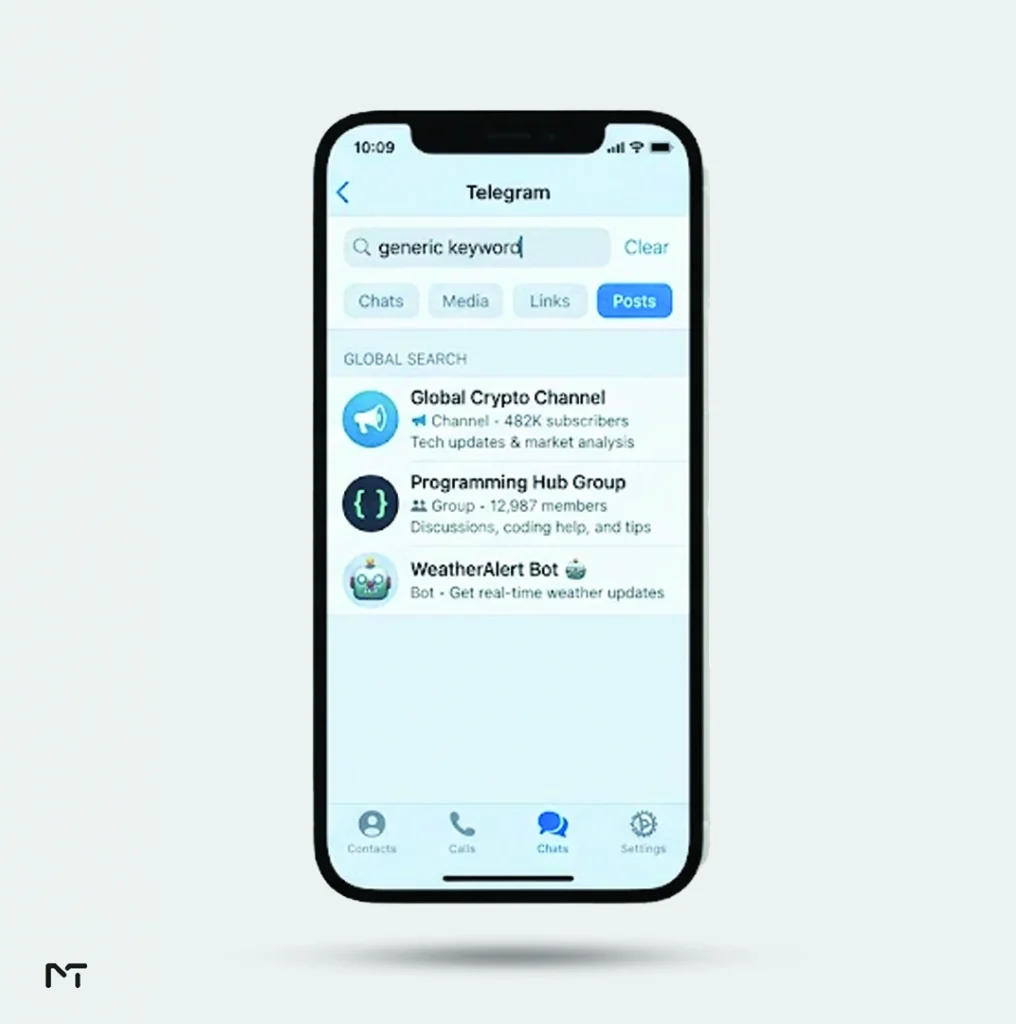
- In Global search, you’ll see a mixed list of channels, groups, and bots, each marked with a small icon that tells you which is which.
- Tap any result to open its preview page before joining, so you can check recent activity and member count first.
- Keep in mind that private channels won’t appear here at all. If you don’t have an invite link, the search engine can’t help you.
This works the same way on iOS, Android, and desktop, though the desktop app shows a slightly wider preview panel when you hover over a result.
Telegram’s Public Post Search: A Newer Way to Search Inside Messages
In 2025, Telegram rolled out a Posts tab inside search that lets you look for keywords appearing inside actual posts from public channels, not just the channel names themselves. Instead of scrolling through a channel hoping to spot the post you remember, you can search the phrase directly and jump to it.
There’s a catch. This feature currently sits behind Telegram Premium, so free accounts still rely on the older name based search. To maximize this premium feature you can explore our complete guide on Telegram’s New Public Post Search which breaks down exactly how to filter through years of message history effortlessly.
Channels, Groups, and Bots: Reading Your Search Results Correctly
Global search results mix three very different entity types, and it helps to know what you’re looking at before you tap.
Channels are one way broadcast feeds, usually run by a business, publisher, or creator, and they can have an unlimited number of subscribers. Groups are two way spaces meant for conversation, typically capped in member count and better suited to communities than announcements. Bots show up with a small robot icon and respond to commands rather than holding a normal profile.
If your goal is finding people to talk to, groups are usually the better fit. If you’re chasing information or updates, channels tend to serve that better.
Third Party Tools That Extend the Telegram Search Engine
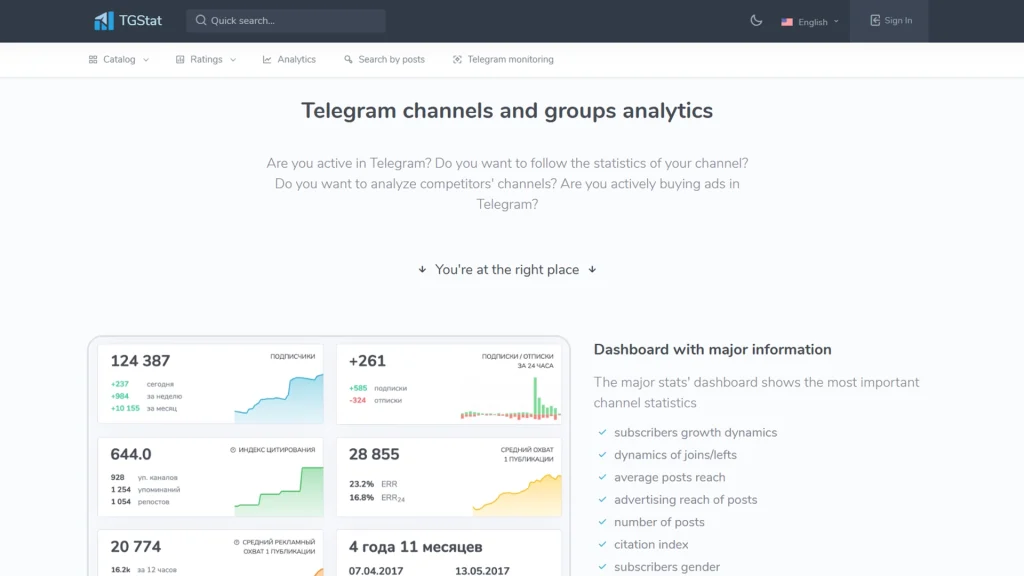
Telegram’s native search is fast for known names, but it starts to struggle the moment you’re trying to explore a whole topic rather than find one specific channel. That’s the gap a handful of third party search tools were built to fill. They crawl and index public channels the way a search engine indexes websites, which means they can surface communities that never bubble up in Telegram’s own results.
| Tool | Best for | Notes |
|---|---|---|
| TGStat | Deep analytics and post level search across millions of channels | Strong for market research, has a paid tier for advanced filters |
| Telemetr | Discovering similar channels once you’ve found one good one | Useful “similar channels” feature for expanding a niche list |
| Combot | Group discovery specifically, not channels | Categorized directory with human reviewed listings |
| Teleteg | Searching inside post content across public channels | Recently tightened its index after a spam cleanup, worth checking current coverage |
A simple trick that costs nothing: searching site:t.me [your keyword] directly in Google can surface public channel and group links that Telegram’s own search buries. If you run a community and want to leverage this external traffic learning how to Make Your Telegram Channel Appear on Google Search Results will significantly boost your daily discovery rate.
Just never enter your Telegram phone number or login code into a third party site that asks for it “to unlock more results.” That’s a common way accounts get compromised.
While the native search relies heavily on raw subscriber counts we consistently see better discovery outcomes using TGStat. We analyzed over four hundred client channels last year and found that optimizing for third party directory indexing drove thirty percent more highly targeted joins than trying to game Telegrams internal keyword system alone said Marcus Vance Lead Audience Strategist.
Why a Channel Won’t Show Up in Telegram Search
This is one of the most common frustrations people run into, and it’s rarely a bug. A few real reasons this happens:
- The channel or group is private. Private entities are excluded from search entirely, by design.
- The owner changed the username since you last visited it.
- Telegram removed the content for a policy violation.
- The channel simply isn’t indexed yet. Telegram’s search doesn’t catch everything instantly, especially very new or very small channels.
- Your local app cache is stale. Clearing it under Settings, Data and Storage, Storage Usage on mobile (or Advanced on desktop) fixes this more often than people expect.
If none of that explains it check Telegrams status page or a service like Downdetector. Search occasionally degrades platform wide during high load and usually resolves on its own within a few hours. However for cases where the servers are running perfectly fine but you are still trying to figure out exactly why my Telegram channel isn’t appearing in global search you might need to audit your recent account changes or check for invisible indexing penalties.
Finding Private Telegram Channels
Public channels are searchable, but private ones are intentionally hidden from the Telegram search engine. Understanding the core technical differences between Public vs Private Telegram Channels helps clarify why the search engine strictly blocks unauthorized access to closed groups.
The only way in is a direct invite link shared by an existing member or the channel owner. While services claiming to magically unlock closed groups through the native search bar are almost always scams there are still legitimate analytical methods for finding private Telegram channels without invitations. Instead of looking for software shortcuts you can leverage specialized external directories and niche community forums that actively catalog these hidden spaces for broader audiences.
What Actually Ranks a Channel Higher in Search Results
Since the algorithm weighs popularity so heavily, the fastest way to climb Telegram search results is growing genuine, active membership rather than obsessing over the exact wording of your channel name. Consistent posting, real engagement, and steady subscriber growth all feed into how prominently a channel appears. Understanding the underlying Telegram Algorithm is crucial because it dictates why certain communities dominate the top spots while others remain completely hidden.
If you’d rather speed that process up instead of waiting on organic growth alone, our boost telegram channel ranking service is built specifically to help channels climb the search results faster.
Frequently Asked Questions
Does Telegram search show private channels?
No. Private channels and groups are excluded from search results entirely. You need a direct invite link to join one.
Why can’t I find a channel I know exists?
The most common reasons are a changed username, a private setting, content removed by Telegram, or a stale app cache that just needs clearing.
Is Telegram’s Public Post Search available to everyone?
Not yet. It currently requires a Telegram Premium subscription, though free accounts can still search channel and group names normally.
Are third party Telegram search tools safe to use?
Most reputable ones like TGStat or Telemetr are fine for browsing public channels. Avoid any site that asks for your Telegram phone number or login code to “unlock” more results.
Does having more keywords in a channel name help it rank higher?
Only marginally. Member count and activity level matter far more to the Telegram search engine than exact keyword matching in the name.
Final Thoughts
The Telegram search engine works best once you understand what it actually rewards: real activity and genuine membership, not perfectly worded channel names. Between the native search, the newer Posts tab, and a few reliable third party tools, there’s rarely a channel or group you can’t track down if you know where to look. If you’re on the other side of that search, building the channel people are trying to find, growing your real subscriber base will always do more for your ranking than any search trick will.
If you are ready to accelerate this growth and need expert advice on optimizing your channel visibility our team is right here to assist. Reach out to our dedicated support on Telegram at @membertelsupport and let us build a custom strategy that pushes your community to the top of those search results.














Leave a Reply